" height="39.61165048543689px" id="ZNWWQDUsB" transform="translate(0 0.195)" width="39.79498837473122px"/><path d="M 14.36 13.33 C 15.643 13.33 16.374 11.864 15.601 10.841 L 7.888 0.619 C 7.048 -0.494 5.28 -0.022 5.107 1.362 L 4.627 5.196 C 4.496 6.248 4.009 7.224 3.248 7.963 L 0.475 10.653 C -0.526 11.624 0.161 13.32 1.555 13.321 Z" fill="rgb(255, 87, 199)" height="13.329661963960334px" id="BFIxPoook" transform="translate(3.344 8.474)" width="15.91740701520282px"/></svg>)

AECOM recently bought Consigli for a reported $390M. For those that don’t know:
Consigli brands itself as “The Autonomous Engineer”, an AI agent for space analysis, unit optimisation, automated MEP loadings, level 3 modelling, report generation, plant room optimisation, tender documents de-risking, O&M docs and more. The company claims its technology gives reductions in engineering time of up to 90%.
From AEC Magazine
Firms aren’t buying AI because it’s trendy. They’re buying it because the teams who adopt automation early will deliver faster, win more bids, and operate with entirely different margins.
And it points to the real story in front of us: AEC isn’t moving toward “AI features”. It’s moving toward agentified workflows.
But the problem is AEC isn’t really ready for this shift. We still rely on 20+ year old authoring tools that live in the desktop. These platforms aren’t even built for the how the industry wants to collaborate today, nevermind how it has to collaborate.
Software that is ‘collaboration-ready for teams’ is also ‘orchestration-ready for agents.’
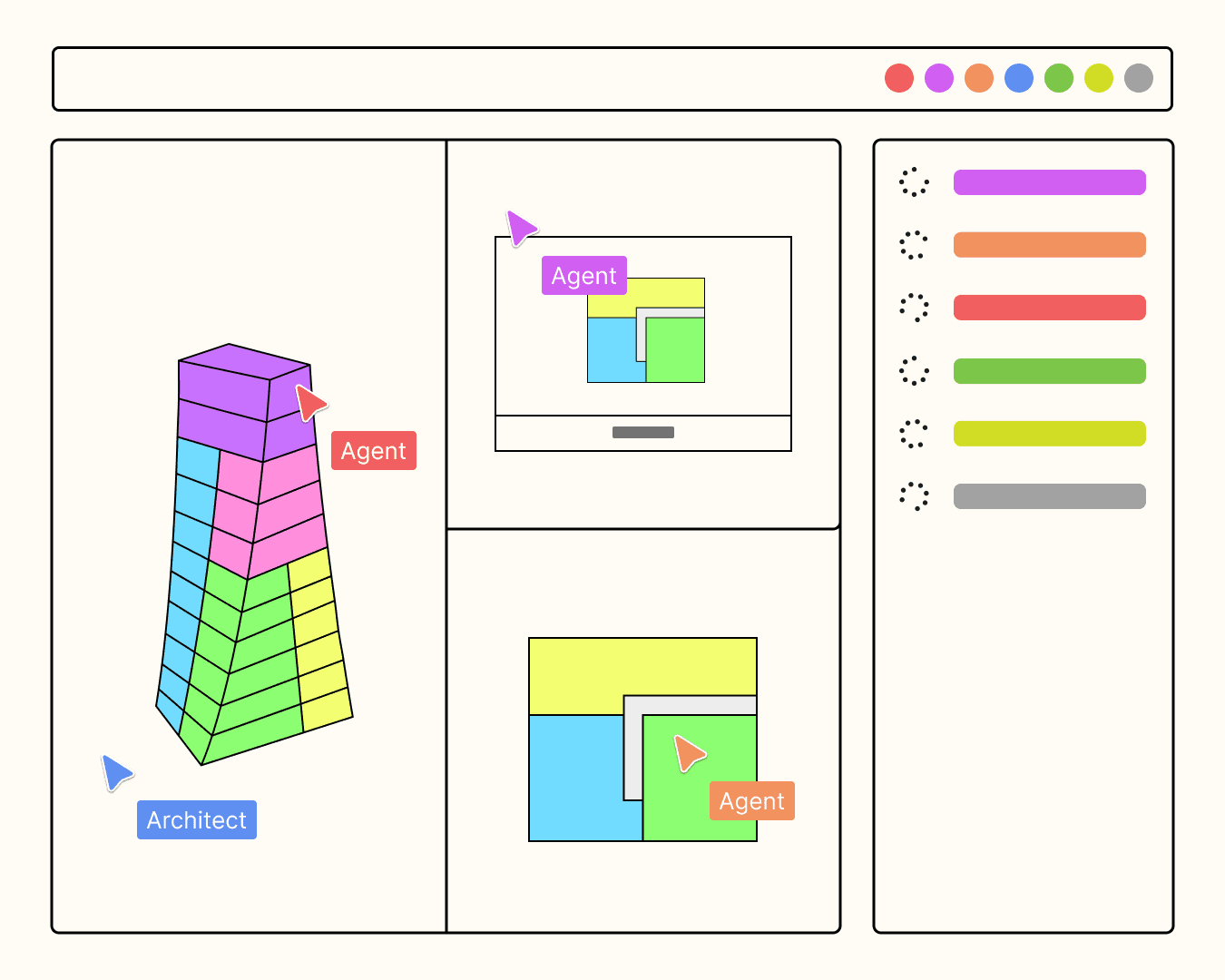
Agents are just more collaborators
Work that used to be done manually is going to be performed by specialized agents. Dozens of them. Hundreds. Allowing individuals and firms to scale their expertise.
You already spend hours every week checking drawings, reconciling metrics, updating reports, and coordinating decisions. Wouldn’t you love to have agents do that for you?
That’s the payoff. Now let me explain why I think this shift is inevitable.
Why AEC hasn’t seen the productivity boom yet
Other industries unlocked AI leverage because the foundations were already in place. AEC hasn’t.
1. There is no VS Code for buildings
Industries such as software engineering have exploded with AI efficiency. Tools like Cursor enable software engineers to become vastly more efficient. But Cursor works because VS Code exists - a structured, extensible, instrumented environment where an agent can see state, manipulate state, and apply safe, structured edits.
AEC has nothing like that today.
There’s no AI-native, cloud-native editor where geometry, metadata, constraints, and collaboration all live in one addressable space.
You cannot bolt agents onto 1990s BIM architecture.
2. Chat is not the UX for spatial work
Architects design by sketching, pushing, pulling, adjusting. Contractors resolve issues visually, not verbally.
Typing instructions into a chat box is slower and less reliable than acting directly in space. Agents need to integrate into the native gestures of the environment - suggesting operations, running analysis, annotating decisions - inside the model, not in a chat window.
3. Real geometry editors are brutally hard
A real agent-compatible AEC stack requires a modern geometry kernel, constraint system, real-time sync, and a collaborative layer built from scratch. This takes years, not months.
But if you build it, agents finally have a place to operate safely.
Again, we need the VS Code before we can build the cursor. Turns out building the VS code for AEC is incredibly hard. It requires a special team over a long period of time to build a full authoring suite for AEC.
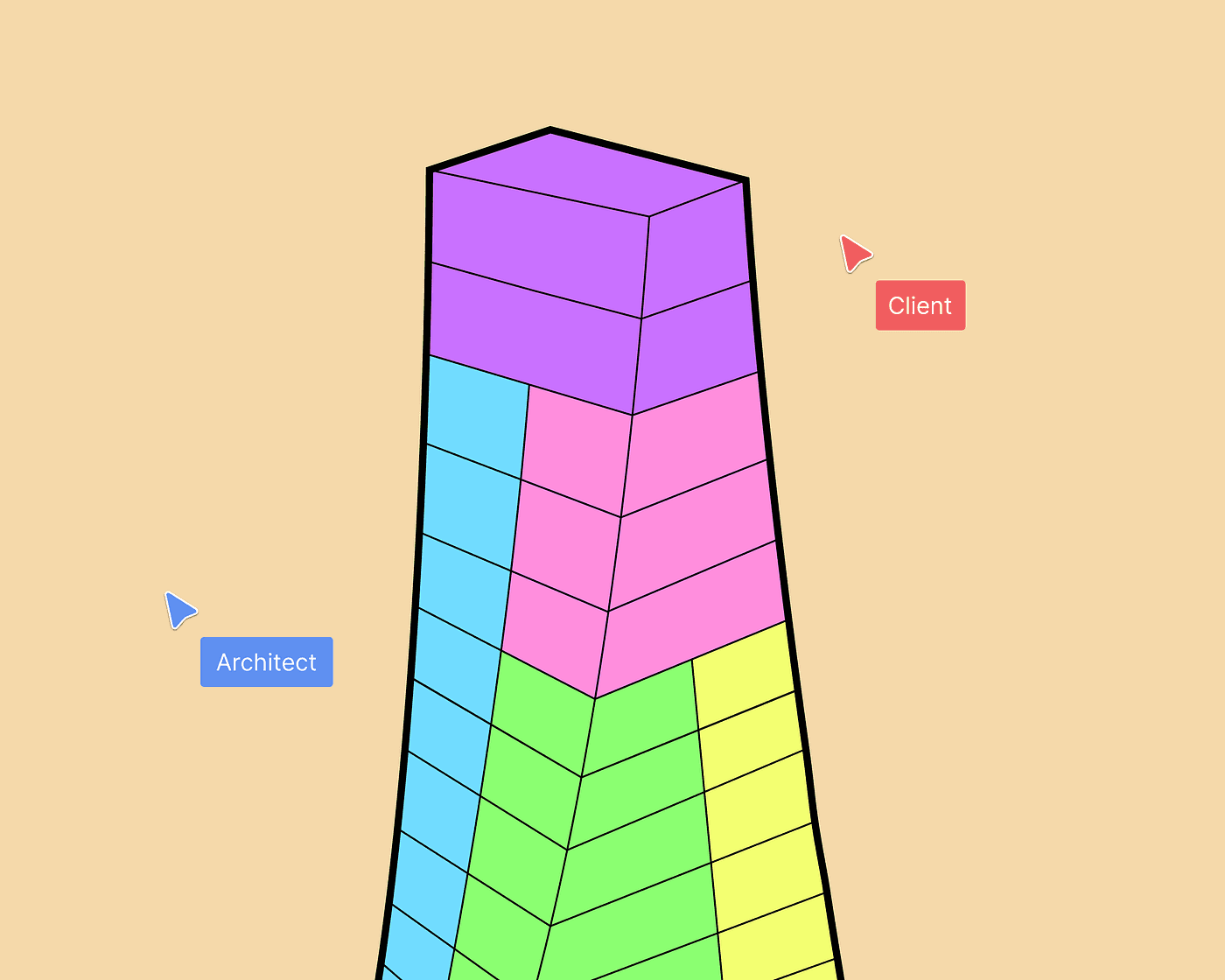
Building a modern authoring tool with collaboration at it’s core, is hard.
4. AEC has no shared corpus of data
LLMs learned to code because billions of lines of code were publicly available. AEC has the opposite: messy, proprietary, inconsistent project files.
This is exactly why owning the authoring environment matters. When you own the schema, you control the training substrate. You can train in-house agents securely, on firm-specific data, without exposing IP to the outside world.
No one talks about this enough: Agents are the first AI wave that actually works with private, firm-level data - not against it.
5. AEC is multimodal by default
Buildings are geometry + zoning + cost + schedule + constructability + systems + metadata, etc etc.
Agents must reason across all of this simultaneously. This isn’t text automation. It’s spatial automation. And it requires spatial tooling.
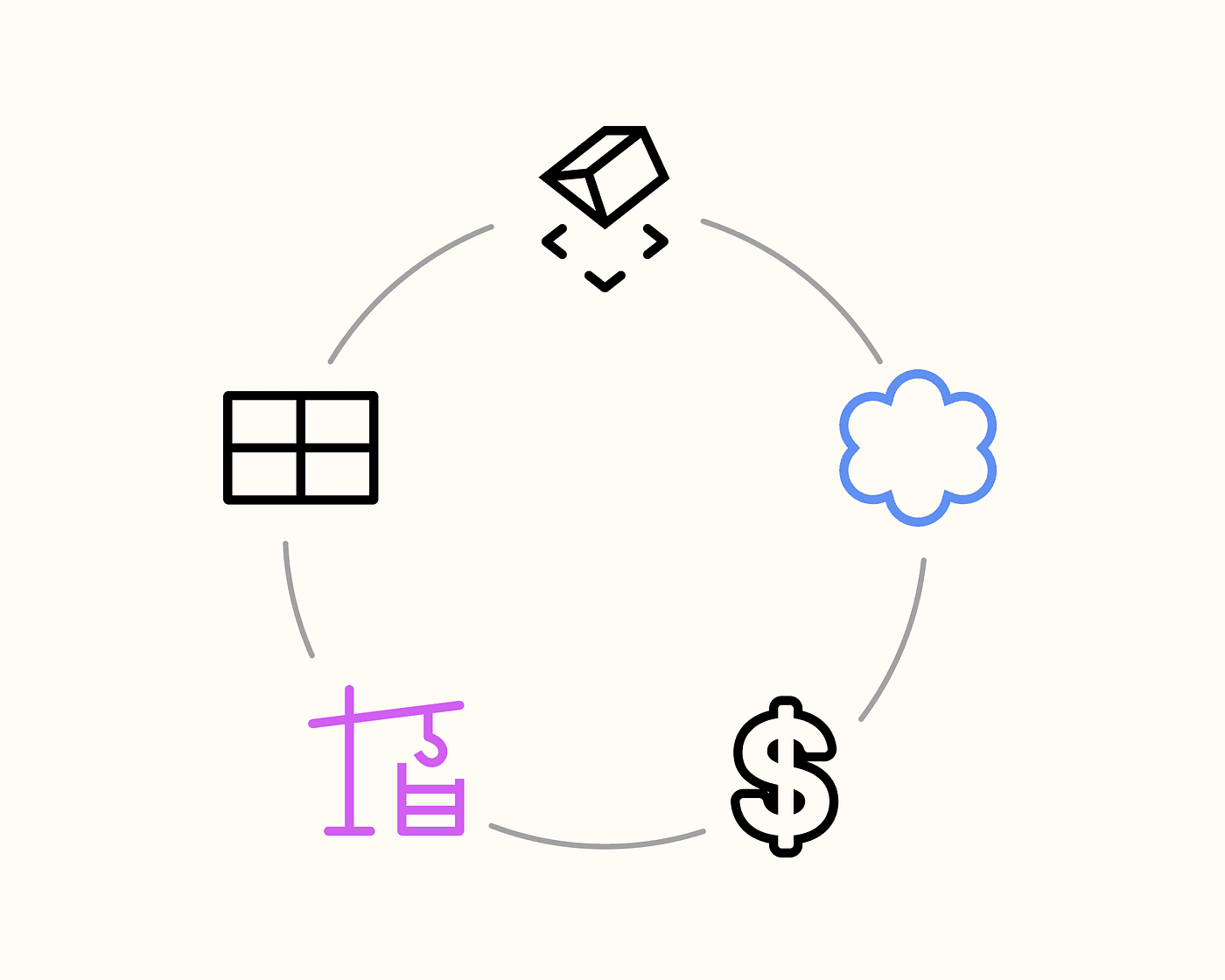
Buildings are more than just text. They are spatial, financial and real assets
So what does AI in AEC actually look like?
Not a monolithic super-agent. A constellation of specialized agents that automate real, revenue-driving work.
In my opinion, AECOM didn’t buy Consigli for software. They bought automated labor. They bought automated decision-making.
They bought the ability to deliver work earlier, faster, and more consistently - and to own the economics of that shift.
This is the heart of the change: Agents tap into labor budgets, not software budgets. That’s why this moment is different.
Your feasibility team? Your precon team? Your envelope studies? Agents will augment and help you scale large chunks of that work.
How workflows actually change
Designers and builders will start delegating, not prompting:
“Run the feasibility agents and compare yield, cost, and constructability.”
“Have the envelope agent test three shading strategies and return the cheapest code-compliant option.”
“Let the costing agent annotate the model as we sketch.”
“Flag any decisions that add cost without adding user value.”
No micromanagement. Just assignment → review → iterate.
Exactly how teams operate today - except faster, more consistent, and infinitely scalable.
Imagine a designer being able to collaborate with a swarm of expert agents to tackle specific problems. How much more effective will that single designer be?
Why the economics finally align
Plugins never scaled because they sat outside the firm’s core economics.
Agents are the economics.
They automate tasks firms bill for. They embody proprietary expertise. They scale the judgment of a firm’s best people without scaling headcount.
Imagine a major GC selling a “Preconstruction Agent” trained on decades of their cost histories, risk patterns, constructability rules, and best practices. It becomes a productized service, not a headcount-based service.
An architect inside Arcol could simply request: “Run ACME GC’s preconstruction agent.”
ACME GC gets paid for expertise delivered at software scale.
That’s the unlock.
Why collaborative apps win this future
Agents need structure, shared context, real-time state, and a geometry environment that exposes everything cleanly.
Legacy desktop BIM can’t provide this.
But cloud-native, collaborative environments can. And here’s the key point people miss:
Software that is ‘collaboration-ready for teams’ is also ‘orchestration-ready for agents.’
At the end of the day, agents are just collaborators. If your tool can’t handle multi-player synchronous collaboration today, then it can’t handle the future that agents can unlock.
The same things that let humans work together - live context, structured elements, immediate feedback, shared state, are the exact prerequisites for multi-agent collaboration.
For any tool to matter in this new world, it must already support multiplayer workflows, structured geometry, and real-time context. Without that foundation, agents simply can’t operate.
This is the philosophy we’ve built into Arcol from day one.
Arcol becomes the place where dozens (and soon hundreds) of agents coordinate, inspect, generate, and advise - right inside the design environment.
The designer becomes both creator and conductor.
The conclusion
The future of AI in AEC won’t look like Cursor and won’t look like a single building-sized copilot. It will look like a landscape of specialized agents running inside a new generation of collaborative authoring tools.
The firms who adopt agents early won’t just work faster, they’ll operate on a completely different curve. Shorter timelines. More predictable delivery. New ways to package and sell expertise.
The technology is the enabler; the real transformation is how your team works.